Who Am I?
The eternal question that leads to Self-realization
"Your own Self-realization is the greatest service you can render the world."
— Sri Ramana Maharshi
The Masters
Three luminaries who illuminated the path of Self-knowledge in the modern era
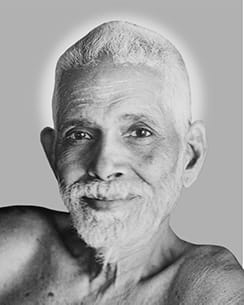
Sri Ramana Maharshi
1879 - 1950
The sage of Arunachala who taught the direct path of Self-inquiry. At age 16, he experienced spontaneous Self-realization and spent the rest of his life at the sacred Arunachala Hill, guiding seekers through the simple yet profound question: "Who am I?"
Core Teaching
Self-Inquiry (Atma Vichara)
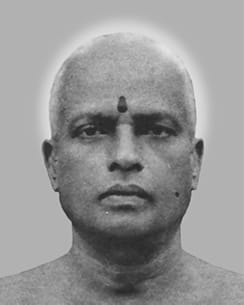
Sri Atmananda Krishna Menon
1883 - 1959
A Kerala police officer who became a renowned Advaita master. He emphasized the direct path of knowledge (jnana yoga) and developed a precise, logical approach to understanding non-duality, making the ancient wisdom accessible to modern minds.
Core Teaching
Direct Path of Knowledge
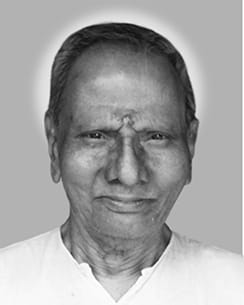
Sri Nisargadatta Maharaj
1897 - 1981
A humble shopkeeper from Mumbai who became one of the most influential Advaita teachers of the 20th century. His direct, uncompromising teachings, recorded in "I Am That," point to the absolute reality beyond all concepts and experiences.
Core Teaching
Abiding in the "I Am"
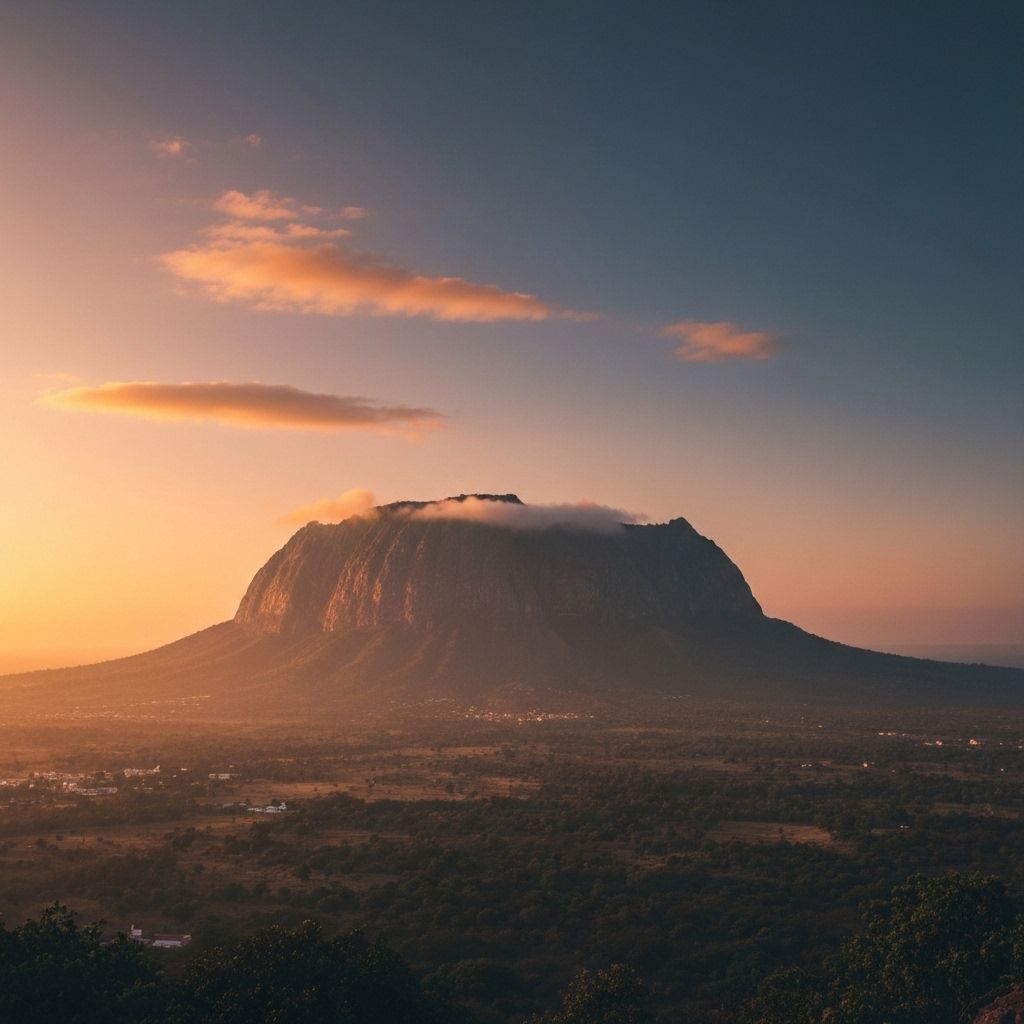
Arunachala
The Sacred Hill of Light
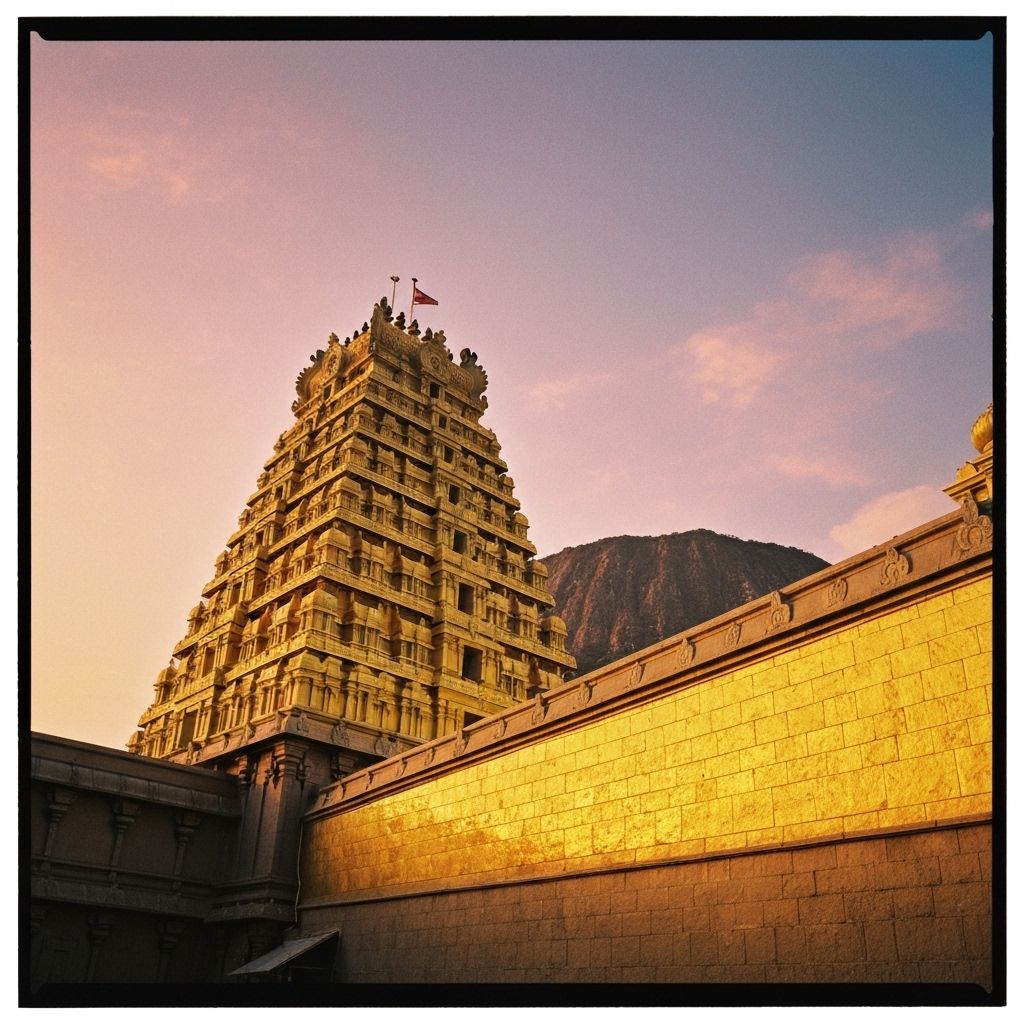
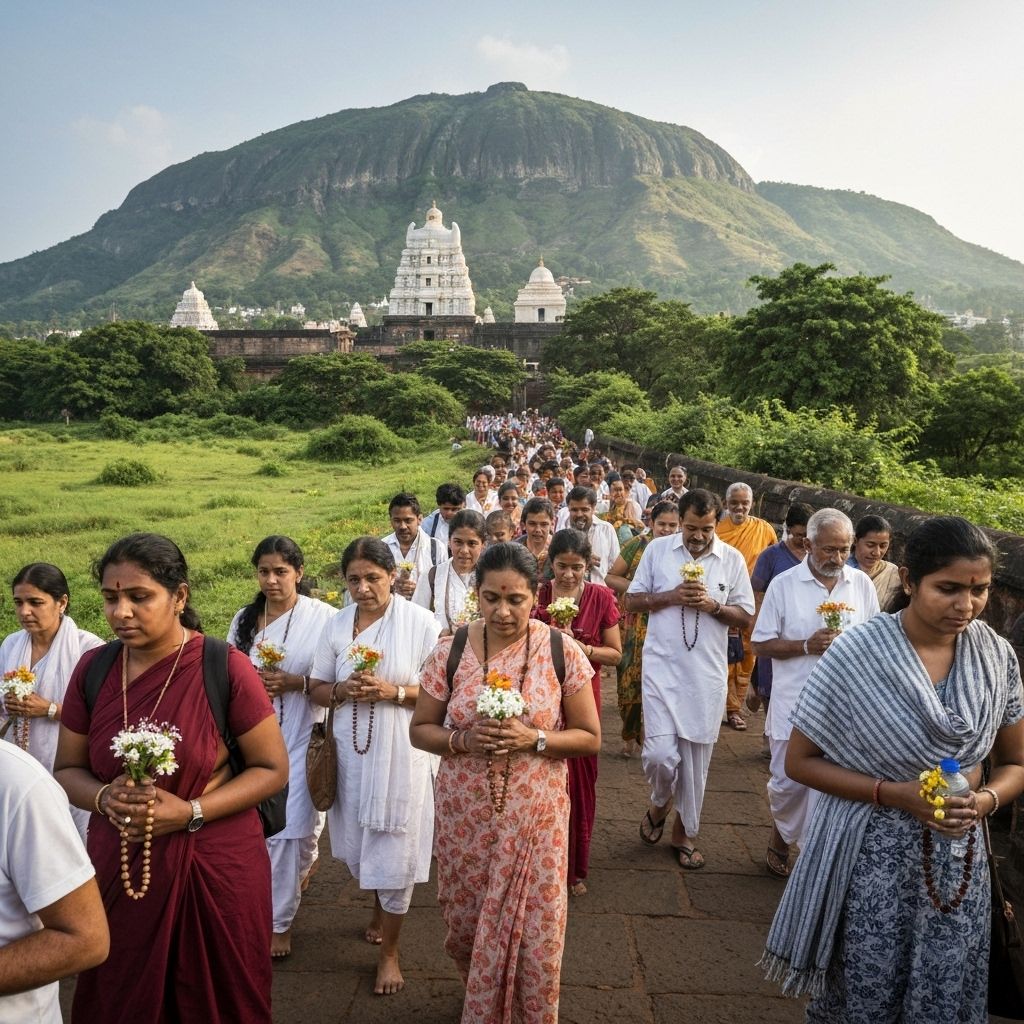
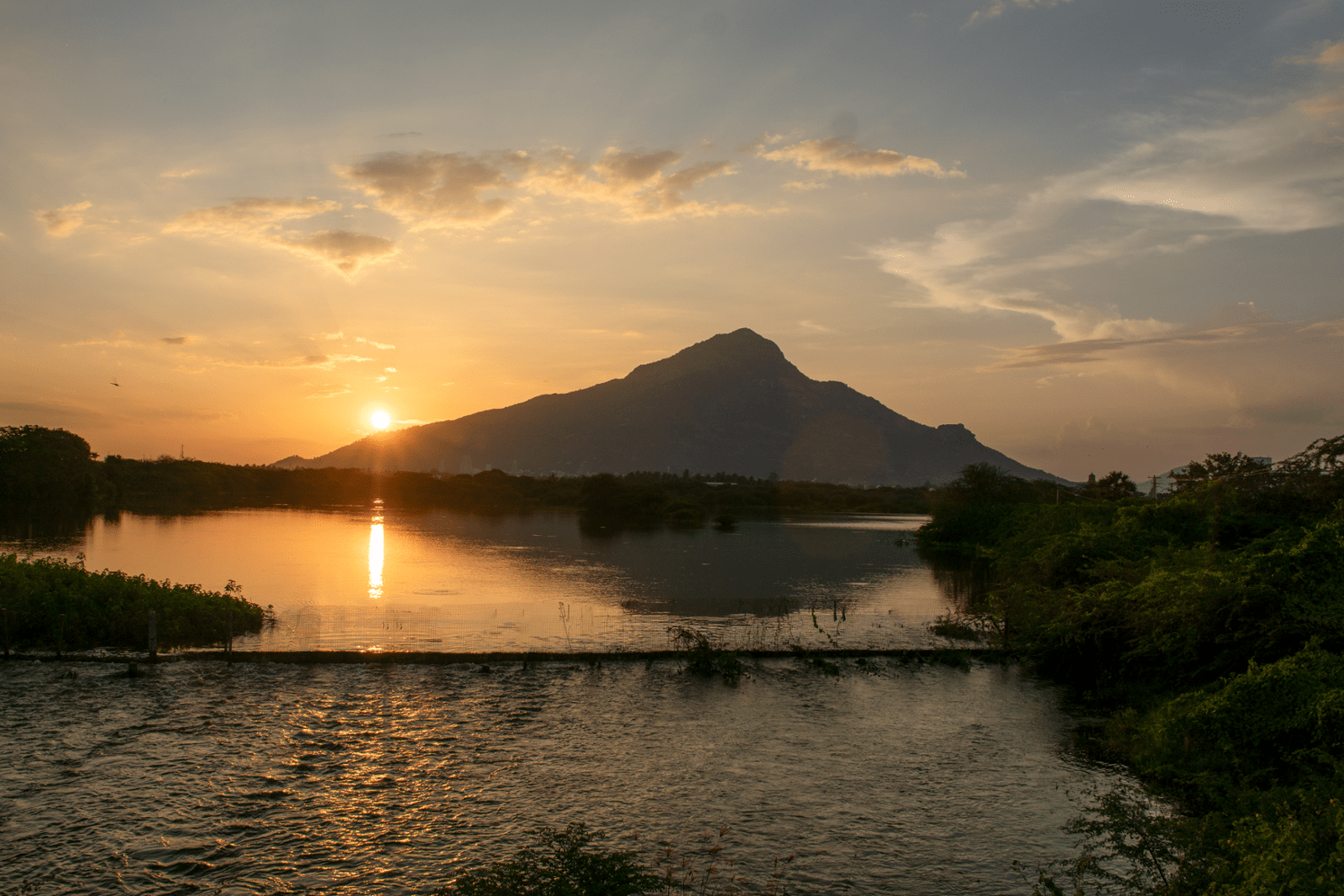
Arunachala is not merely a mountain—it is Shiva himself in the form of light, a beacon of consciousness that has drawn seekers for millennia. Located in Tiruvannamalai, Tamil Nadu, this ancient hill is considered one of the most sacred places in India.
Sri Ramana Maharshi was irresistibly drawn to Arunachala at age 16 and never left. He often said that Arunachala is the spiritual heart of the world, and that the mountain itself is a powerful guru, silently radiating grace and awakening those who approach with sincere hearts.
"Arunachala is truly the holy place. Of all holy places, it is the most sacred. Know that it is the heart of the world. It is truly Shiva himself."
— Sri Ramana Maharshi
Core Teachings
The essence of Advaita Vedanta as transmitted by these modern sages
Atma Vichara
The direct method taught by Sri Ramana Maharshi. By persistently asking "Who am I?" and tracing the sense of "I" back to its source, one discovers the true Self beyond the ego-mind.
Practice
When thoughts arise, instead of following them, ask yourself: "To whom does this thought arise?" The answer is "To me." Then ask: "Who am I?" This inquiry leads attention back to its source.
Pure Presence
Sri Nisargadatta Maharaj emphasized staying with the feeling of "I Am"—the pure sense of being, prior to any identification with body, mind, or personality. This is the doorway to the Absolute.
Practice
Rest in the simple feeling of being, the sense "I Am," without adding any qualifications. Before you are anything specific, you simply are. Stay with this pure existence.
Jnana Yoga
Sri Atmananda Krishna Menon taught the path of direct knowledge through precise discrimination between the Real and the unreal. Understanding that consciousness is the only constant in all experiences.
Practice
Examine your experiences: waking, dreaming, and deep sleep. What is the common factor? You, the witness. Recognize that you are the unchanging awareness in which all experiences appear.
Advaita
The fundamental teaching that there is only One reality—pure consciousness or awareness. The apparent separation between subject and object, self and other, is an illusion created by the mind.
Practice
Recognize that the awareness with which you know your thoughts is the same awareness with which you know the world. There is only one consciousness, appearing as many.
Modern Applications
Ancient wisdom for contemporary life—practical ways to apply these teachings today
Self-inquiry is the foundation of many modern mindfulness practices. The simple act of observing thoughts without identification is direct application of these ancient teachings.
Example
When anxiety arises, instead of being consumed by it, ask: "Who is anxious?" This creates space between awareness and the emotion, revealing your true nature as the observer.
Modern psychology increasingly recognizes the value of the "witness consciousness." Techniques like ACT (Acceptance and Commitment Therapy) echo the teaching of observing thoughts without attachment.
Example
In cognitive therapy, recognizing "I am not my thoughts" parallels the Advaita teaching that you are the awareness in which thoughts appear, not the thoughts themselves.
The practice of returning to the sense of "I Am" provides immediate relief from mental suffering. By resting in pure being, the mind's agitation naturally subsides.
Example
During a stressful moment, pause and feel the simple sense of existing—"I Am"—prior to any story about the situation. This shift in attention dissolves the stress.
Understanding your true nature as awareness rather than the ego-personality frees you to live authentically, without the constant need for validation or fear of judgment.
Example
When you know yourself as the unchanging witness, you can play your role in life fully while remaining unattached to outcomes, leading to genuine freedom and joy.
Recognizing the same consciousness in all beings transforms relationships. The sense of separation dissolves, replaced by natural compassion and understanding.
Example
When conflict arises, remember that the awareness looking through your eyes is the same awareness looking through the other person's eyes. This recognition brings peace.
Operating from the space of pure awareness rather than ego allows creativity to flow naturally. Work becomes an expression of being rather than a means to become something.
Example
Before starting a creative project, rest in the "I Am" for a few moments. Let the work arise from this space of presence rather than from mental effort or anxiety.
"The degree of freedom from unwanted thoughts and the degree of concentration on a single thought are the measures to gauge spiritual progress."
— Sri Ramana Maharshi
Explore the Teachings
Click on any topic to discover profound wisdom from the masters
Self-Inquiry
The direct path to Self-realization through the question 'Who am I?' This practice involves turning attention inward to investigate the source of the 'I'-thought, leading to the dissolution of the ego and recognition of one's true nature as pure consciousness.
Sri Ramana Maharshi taught:
"The question 'Who am I?' is not really meant to get an answer, the question 'Who am I?' is meant to dissolve the questioner." *(Talks with Sri Ramana Maharshi, Talk 146)*
"Of all the thoughts that arise in the mind, the 'I' thought is the first. It is only after the rise of this that the other thoughts arise. It is after the appearance of the first personal pronoun that the second and third personal pronouns appear; without the first personal pronoun there will not be the second and third." *(Who Am I? - Nan Yar?)*
Sri Nisargadatta Maharaj said:
"The only true teacher is within. Follow the inner guide. He alone will take you home." *(I Am That, Chapter 48)*
"Find out what you are not. All that you are not is the false. Discard it and you are left with what you are." *(I Am That, Chapter 89)*
Sri Atmananda Krishna Menon explained:
"The question 'Who am I?' should be directed to the 'I'-principle itself, and not to the body or mind. When you ask yourself 'Who am I?', you are really asking 'What is the nature of this I that I take myself to be?'" *(Notes on Spiritual Discourses, Note 44)*
Self-inquiry is the most direct method because it attacks the root of ignorance—the false identification with the body-mind. By persistently questioning the nature of the 'I', one discovers that it has no independent existence and what remains is pure awareness itself.
Who Am I?
"Who Am I?" (Nan Yar?) is Sri Ramana Maharshi's fundamental teaching, presented in a short text that answers the essential questions about the nature of the Self, the mind, and the path to liberation.
Sri Ramana Maharshi taught:
"Who Am I? I am not this physical body, nor am I the five senses. I am not the mind, nor the intellect, nor the ego. I am That which remains when all these are negated." *(Who Am I? - Nan Yar?)*
"The gross body which is composed of the seven dhatus (tissues), I am not; the five sense organs... I am not; the five organs of action... I am not; the five vital airs... I am not; even the mind which thinks, I am not; even the ignorance which is endowed only with the residual impressions of objects, and in which there are no objects and no functioning's, I am not." *(Who Am I? - Nan Yar?)*
Sri Nisargadatta Maharaj said:
"When you ask 'Who am I?', you are not looking for a name or a description. You are looking for that which is beyond all names and descriptions." *(I Am That, Chapter 51)*
"The answer to 'Who am I?' is not in words. It is in the silence that remains when all words cease." *(I Am That, Chapter 78)*
Sri Atmananda Krishna Menon explained:
"The question 'Who am I?' is the key that unlocks the door to self-realization. It is not a question to be answered by the mind, but a question that dissolves the mind." *(Atma Darshan, Verse 12)*
This teaching is the essence of Advaita Vedanta—the direct recognition that you are not the limited body-mind but the infinite, eternal Self.
The Nature of the Self
The Self (Atman) is pure consciousness, eternal, infinite, and unchanging. It is not an object that can be known, but the subject that knows all objects. It is your true nature, always present, never absent.
Sri Ramana Maharshi taught:
"The Self is that where there is absolutely no 'I'-thought. That is called Silence. The Self itself is the world; the Self itself is 'I'; the Self itself is God; all is the Self." *(Talks with Sri Ramana Maharshi, Talk 20)*
"The Self is pure consciousness. It is the light that illumines the mind and makes knowledge possible. Without the Self, nothing can be known." *(Spiritual Instruction, Chapter 1)*
Sri Nisargadatta Maharaj said:
"The Self is not something you can find, for you are it. It is not something you can know, for you are the knower." *(I Am That, Chapter 29)*
"Your true nature is beyond all concepts, beyond all experiences. It is the pure 'I am' that exists before all thoughts." *(I Am That, Chapter 2)*
Sri Atmananda Krishna Menon explained:
"The Self is self-luminous. It does not depend on anything else for its existence or its knowledge. It is the light by which everything else is known." *(Atma Nirvriti, Verse 8)*
"The nature of the Self is Sat-Chit-Ananda: pure existence, pure consciousness, and pure bliss. These are not qualities of the Self; they are the Self itself." *(Atma Darshan, Verse 3)*
Understanding the nature of the Self is not an intellectual exercise but a direct recognition of what you have always been.
Consciousness
Consciousness is not something we have; it is what we are. Pure awareness is the substratum of all experience, the light by which everything is known. It is self-luminous, requiring nothing else to illuminate it, and is the ultimate reality.
Sri Ramana Maharshi explained:
"Consciousness is indeed always with us. Everyone knows 'I am!' No one can deny his own being." *(Talks with Sri Ramana Maharshi, Talk 97)*
"The mind is only a bundle of thoughts. The thoughts arise because there is the thinker. The thinker is the ego. The ego, if sought, will automatically vanish." *(Talks with Sri Ramana Maharshi, Talk 146)*
Sri Nisargadatta Maharaj taught:
"Consciousness is the highest principle. It is the source of all. Without consciousness, nothing is." *(I Am That, Chapter 70)*
"You are not the body. You are the immensity and infinity of consciousness. Realize this, and you are free." *(I Am That, Chapter 85)*
"The consciousness in you and the consciousness in me, apparently two, really one, seek unity and that is love." *(I Am That, Chapter 41)*
Sri Atmananda Krishna Menon clarified:
"Consciousness is self-luminous. It illumines itself and all objects. Just as the sun needs no other light to be seen, consciousness needs no other consciousness to be aware of itself." *(Atma Nirvriti, Verse 15)*
"Awareness is not a quality or attribute of something else. It is the very nature of existence itself. To be is to be aware." *(Notes on Spiritual Discourses, Note 89)*
Pure consciousness is not personal—it is the universal awareness in which all experiences arise and subside. Recognizing this is the key to liberation.
The Illusion of the Ego
The ego is the false identification with the body-mind complex. It arises as the 'I'-thought and creates the illusion of separation. Through self-inquiry, one discovers that the ego has no independent existence and dissolves in the light of awareness.
Sri Ramana Maharshi taught:
"The ego is like a ghost. It has no real existence. When you search for it, it disappears." *(Talks with Sri Ramana Maharshi, Talk 15)*
"There is no greater mystery than this: being reality ourselves, we seek to gain reality. We think that there is something hiding our reality and that it must be destroyed before the reality is gained." *(Talks with Sri Ramana Maharshi, Talk 12)*
Sri Nisargadatta Maharaj said:
"The sense of being an ego is the greatest calamity. Get rid of it at the earliest." *(I Am That, Chapter 32)*
"You have squeezed yourself into the span of a lifetime and the volume of a body and thus created the innumerable conflicts of life and death, pleasure and pain, hope and fear." *(I Am That, Chapter 44)*
"The ego is a bundle of memories and habits. It has no substance of its own." *(I Am That, Chapter 12)*
Sri Atmananda Krishna Menon explained:
"The ego is nothing but the identification of consciousness with a particular body-mind. When this identification is removed through discrimination, the ego vanishes and only pure consciousness remains." *(Notes on Spiritual Discourses, Note 5)*
"The ego appears to exist only because you have never examined it closely. When you investigate it, you find that it is nothing but a thought, and like all thoughts, it has no independent reality." *(Notes on Spiritual Discourses, Note 6)*
The ego is not an entity to be destroyed but a misunderstanding to be corrected. When you see clearly that you are not the limited individual but infinite awareness, the ego naturally subsides.
Meditation & Silence
True meditation is not a practice but our natural state—the silence of pure being. In this silence, free from thoughts and mental activity, the Self shines in its own glory. Sri Ramana emphasized that silence is the most powerful teaching.
Sri Ramana Maharshi taught:
"Silence is the most potent form of work. However vast and emphatic the scriptures may be, they fail in their effect. The Guru is quiet and peace prevails in all. His silence is more vast and more emphatic than all the scriptures put together." *(Talks with Sri Ramana Maharshi, Talk 100)*
"Meditation is your true nature. You call it meditation now because there are other thoughts distracting you. When these thoughts are dispelled, you remain alone—that is, in the state of meditation free from thoughts; and that is your real nature which you are now trying to gain by keeping away other thoughts." *(Talks with Sri Ramana Maharshi, Talk 101)*
Sri Nisargadatta Maharaj said:
"In the silence of the mind, you will find the answer to all your questions." *(I Am That, Chapter 60)*
"Wisdom is knowing I am nothing, love is knowing I am everything, and between the two my life moves." *(I Am That, Chapter 61)*
"The real meditation is how you live your life. It is not something you do for ten minutes or an hour." *(I Am That, Chapter 62)*
Sri Atmananda Krishna Menon explained:
"True meditation is not concentration on an object, but resting in your own nature as pure awareness. It is not doing something, but being what you are." *(Atma Darshan, Verse 13)*
"Silence is not the absence of sound, but the absence of the ego. When the ego is absent, there is perfect silence, even in the midst of activity." *(Atma Darshan, Verse 14)*
In true meditation, there is no meditator and nothing to meditate upon. There is only the pure awareness that you are, shining in its own light.
Liberation (Moksha)
Liberation is not something to be attained in the future; it is the recognition of what already is. It is freedom from the illusion of bondage, the realization that you have always been free, whole, and complete. The liberated one sees only the Self everywhere.
Sri Ramana Maharshi taught:
"Liberation is our very nature. We are that. The very fact that we wish for liberation shows that freedom from all bondage is our real nature." *(Talks with Sri Ramana Maharshi, Talk 1)*
"You are already free. You are the Self. You have always been free. There is no bondage except in imagination." *(Talks with Sri Ramana Maharshi, Talk 2)*
Sri Nisargadatta Maharaj said:
"Liberation is not an acquisition. It is the recognition of what you already are." *(I Am That, Chapter 10)*
"You are not in the world, the world is in you. When you understand this, you are free." *(I Am That, Chapter 11)*
"The liberated man is not the person who has achieved something, but the one who has understood that there is nothing to achieve." *(I Am That, Chapter 12)*
Sri Atmananda Krishna Menon explained:
"Liberation is not a change of state, but a change of understanding. You do not become free; you recognize that you have always been free." *(Notes on Spiritual Discourses, Note 7)*
"The jnani (liberated one) knows that he is not the doer, not the experiencer, not the thinker. He knows himself as the pure witness, untouched by anything that happens." *(Notes on Spiritual Discourses, Note 8)*
Liberation is not escape from the world but freedom from the illusion that you are bound. When you realize your true nature, you see that you were never bound and there is nothing to be liberated from.
The Heart (Hridaya)
The spiritual Heart is not the physical organ but the center of consciousness, located slightly to the right of the chest. It is the source from which the 'I'-thought arises and into which it subsides. Abiding in the Heart is abiding as the Self.
Sri Ramana Maharshi taught:
"The Heart is not physical; it is spiritual. The seat of consciousness is the Heart, which is on the right side of the chest." *(Talks with Sri Ramana Maharshi, Talk 3)*
"The Heart is the Self. If one knows the Self, one knows the Heart. They are not different." *(Talks with Sri Ramana Maharshi, Talk 4)*
"When the mind subsides into the Heart, the 'I' thought disappears and the Self alone remains." *(Talks with Sri Ramana Maharshi, Talk 5)*
Sri Nisargadatta Maharaj said:
"The heart is the hub of all sacred places. Go there and roam." *(I Am That, Chapter 7)*
"In the heart, the reflection of reality is the clearest. The mind creates the abyss, the heart crosses it." *(I Am That, Chapter 8)*
Sri Atmananda Krishna Menon explained:
"The Heart is the center of your being, the source of all thoughts and perceptions. It is not a location in space, but the very core of consciousness itself." *(Atma Darshan, Verse 15)*
"To abide in the Heart means to rest in your true nature as pure awareness, without identifying with thoughts, emotions, or sensations." *(Atma Darshan, Verse 16)*
The Heart is the seat of the Self, the source and substance of all that is. When attention is withdrawn from external objects and turned inward, it naturally settles in the Heart, where peace and bliss are found.
Surrender & Devotion (Bhakti)
Complete surrender to the divine or to the Self is another path to realization. By offering all thoughts, actions, and the sense of doership to the higher power, the ego dissolves. Devotion and self-inquiry ultimately lead to the same destination.
Sri Ramana Maharshi taught:
"There are two ways: one is looking into the source of 'I' and merging into that source. The other is feeling 'I am helpless by myself, God alone is all-powerful and except throwing myself completely on Him, there is no other means of safety for me,' and thus gradually developing the conviction that God alone exists and the ego does not count." *(Talks with Sri Ramana Maharshi, Talk 6)*
"Surrender is to give oneself up to the original cause of one's being. Do not delude yourself by imagining such a source to be some God outside you. One's source is within oneself. Give yourself up to it." *(Talks with Sri Ramana Maharshi, Talk 7)*
Sri Nisargadatta Maharaj said:
"Surrender is the ultimate act of intelligence. It is the recognition that you are not the doer." *(I Am That, Chapter 9)*
"When you realize that you are nothing, that is wisdom. When you realize that you are everything, that is love. Between these two, your life flows." *(I Am That, Chapter 10)*
Sri Atmananda Krishna Menon explained:
"Surrender means giving up the sense of being the doer. When you recognize that all actions happen by themselves and you are merely the witness, that is true surrender." *(Notes on Spiritual Discourses, Note 9)*
"Devotion to the Guru or to God is devotion to your own true Self. There is no difference between the Guru, God, and the Self." *(Notes on Spiritual Discourses, Note 10)*
True surrender is not weakness but the highest wisdom—the recognition that the separate self is an illusion and that everything is done by the one infinite consciousness.
The Witness (Sakshi)
The witness is the pure awareness that observes all experiences without being affected by them. It is the unchanging background against which all phenomena appear and disappear. Recognizing oneself as the witness is a key step in self-realization.
Sri Ramana Maharshi taught:
"The witness is the Self. It is pure consciousness, untouched by anything that is witnessed." *(Talks with Sri Ramana Maharshi, Talk 8)*
"You are not the body, not the mind, not the thoughts. You are the witness of all these. Abide as the witness and you will know your true nature." *(Talks with Sri Ramana Maharshi, Talk 9)*
Sri Nisargadatta Maharaj said:
"The witness is not a person. The person comes and goes, the witness is always there." *(I Am That, Chapter 11)*
"Be the witness of your thoughts, feelings, and sensations. Don't identify with them. You are the screen on which all this is projected." *(I Am That, Chapter 12)*
"The witness is not affected by what it witnesses. Just as the mirror is not affected by the reflections in it, the witness is not affected by the experiences it observes." *(I Am That, Chapter 13)*
Sri Atmananda Krishna Menon explained:
"The witness is the ultimate subject, the pure 'I' that is aware of all objects but is itself never an object." *(Atma Darshan, Verse 17)*
"To be the witness means to stand back from all experiences and recognize that you are the awareness in which they appear. This awareness is your true nature." *(Atma Darshan, Verse 18)*
The witness is not a state to be cultivated but the ever-present reality that you are. By recognizing yourself as the witness, you step out of identification with the body-mind and rest in your true nature as pure consciousness.
Non-Duality (Advaita)
Advaita means 'not two'—the teaching that there is only one reality, and that is consciousness or Brahman. All apparent multiplicity is an illusion (maya). When the veil of ignorance is lifted, one realizes that the individual self and the universal Self are one and the same.
Sri Ramana Maharshi taught:
"There is no difference between God, Guru, and Self. What exists is only the one Self. When limited to the body, it is called the individual self; when all-pervading, it is called God; and when guiding the individual from within, it is called the Guru." *(Talks with Sri Ramana Maharshi, Talk 10)*
"The world is illusory; Brahman alone is real; Brahman is the world." *(Talks with Sri Ramana Maharshi, Talk 11)*
Sri Nisargadatta Maharaj said:
"There is only one mistake you are making: you take the inner for the outer and the outer for the inner. What is in you, you take to be outside you and what is outside, you take to be in you." *(I Am That, Chapter 14)*
"Wisdom tells me I am nothing. Love tells me I am everything. Between the two my life flows." *(I Am That, Chapter 15)*
"The real is one. It cannot be divided. All divisions are in the mind." *(I Am That, Chapter 16)*
Sri Atmananda Krishna Menon explained:
"Advaita is not a philosophy or a belief system. It is the direct recognition of the truth that there is only one reality, and you are that." *(Notes on Spiritual Discourses, Note 11)*
"The appearance of multiplicity is due to ignorance. When ignorance is removed through knowledge, only the one Self remains." *(Notes on Spiritual Discourses, Note 12)*
Non-duality is not a concept to be understood intellectually but a truth to be realized directly. When the mind becomes quiet and the ego subsides, the non-dual reality shines forth as your own true nature.
Maya (Illusion)
Maya is the cosmic illusion that makes the one appear as many, the eternal appear as temporal, and the infinite appear as finite. It is not that the world is unreal, but that it is not what it appears to be. When seen rightly, the world is nothing but Brahman.
Sri Ramana Maharshi taught:
"The world is not an illusion in the sense that it does not exist. It exists, but not as it appears. When you know the Self, you see the world as it really is—as the Self itself." *(Talks with Sri Ramana Maharshi, Talk 12)*
"Maya is the power of the Self. It is not separate from the Self. Just as the snake appears in the rope due to ignorance, the world appears in Brahman due to maya." *(Talks with Sri Ramana Maharshi, Talk 13)*
Sri Nisargadatta Maharaj said:
"The world is not an illusion, but your idea of it is. You take the world to be something it is not." *(I Am That, Chapter 17)*
"Maya is not the denial of reality, but the assertion that what appears is not what it seems to be." *(I Am That, Chapter 18)*
"The power that creates the illusion is the same power that removes it. That power is consciousness itself." *(I Am That, Chapter 19)*
Sri Atmananda Krishna Menon explained:
"Maya is the apparent power by which the one Self appears as the many. It is neither real nor unreal, but indescribable." *(Atma Darshan, Verse 19)*
"The world appears real as long as you take yourself to be a separate individual. When you realize your true nature, the world is seen as nothing but consciousness." *(Atma Darshan, Verse 20)*
Maya is not something to be destroyed but understood. When you see clearly, you realize that there never was any illusion—there is only the one Self appearing as all this.
Jnana (Knowledge/Wisdom)
Jnana is not intellectual knowledge but direct realization of the Self. It is the wisdom that arises when ignorance is removed, revealing the truth that has always been present. The jnani (knower) is one who has realized the Self and lives in that realization.
Sri Ramana Maharshi taught:
"Jnana is not something to be attained. It is your very nature. Ignorance alone has to be removed." *(Talks with Sri Ramana Maharshi, Talk 14)*
"The jnani sees no difference between himself and others, between the world and Brahman. He sees only the one Self everywhere." *(Talks with Sri Ramana Maharshi, Talk 15)*
"True knowledge is to know that you are not the body, not the mind, but pure consciousness itself." *(Talks with Sri Ramana Maharshi, Talk 16)*
Sri Nisargadatta Maharaj said:
"Knowledge is not something you acquire. It is something you are. When you remove the false, the true remains." *(I Am That, Chapter 20)*
"The jnani knows that he is not the doer, not the experiencer. He knows himself as the pure witness, untouched by anything." *(I Am That, Chapter 21)*
"Wisdom is not a matter of learning, but of being. You cannot become wise; you can only recognize that you already are." *(I Am That, Chapter 22)*
Sri Atmananda Krishna Menon explained:
"Jnana is the direct knowledge of the Self. It is not mediated by the mind or the senses. It is immediate and self-evident." *(Notes on Spiritual Discourses, Note 13)*
"The jnani has realized that he is not the body-mind, but the pure consciousness that illumines the body-mind. This realization is permanent and irreversible." *(Notes on Spiritual Discourses, Note 14)*
Jnana is the fruit of self-inquiry and discrimination. When the false is seen as false, the true stands revealed in its own light.
The Three States
The three states of consciousness—waking, dream, and deep sleep—are all experienced by the Self, which remains unchanged through all of them. By understanding the nature of these states, one realizes that the Self is beyond all states.
Sri Ramana Maharshi taught:
"You are present in all three states. In waking, you say 'I am awake.' In dream, you say 'I dreamt.' In sleep, you say 'I slept well.' The 'I' that is present in all three states is the Self." *(Talks with Sri Ramana Maharshi, Talk 17)*
"The Self is the witness of all three states. It is not affected by any of them. Just as the screen is not affected by the pictures projected on it, the Self is not affected by the states that appear in it." *(Talks with Sri Ramana Maharshi, Talk 18)*
Sri Nisargadatta Maharaj said:
"In deep sleep, you are free from the body and the mind, yet you exist. This proves that you are not the body or the mind." *(I Am That, Chapter 23)*
"The three states come and go, but you remain. You are the constant factor in all changing experiences." *(I Am That, Chapter 24)*
Sri Atmananda Krishna Menon explained:
"The three states are all objects of your awareness. You are the subject that is aware of them. By recognizing this, you realize that you are beyond all states." *(Notes on Spiritual Discourses, Note 15)*
"In deep sleep, there is no world, no body, no mind, yet you exist. This existence is your true nature—pure consciousness, independent of all states." *(Notes on Spiritual Discourses, Note 16)*
By examining the three states, you discover that you are the unchanging awareness in which all states appear and disappear. This awareness is your true nature.
Turiya (The Fourth State)
Turiya is the fourth state of consciousness, beyond waking, dream, and deep sleep. It is not a state in the ordinary sense, but the ever-present reality that underlies all states. It is pure consciousness, the Self itself.
Sri Ramana Maharshi taught:
"Turiya is not a fourth state added to the other three. It is the substratum of all three states, the reality that is always present." *(Talks with Sri Ramana Maharshi, Talk 19)*
"When you realize that you are the witness of all three states, you are established in turiya. This is your natural state." *(Talks with Sri Ramana Maharshi, Talk 20)*
Sri Nisargadatta Maharaj said:
"Turiya is not something to be attained. It is what you are. The three states come and go in turiya, but turiya itself never changes." *(I Am That, Chapter 25)*
"To be in turiya is to be yourself, without identification with any state or experience." *(I Am That, Chapter 26)*
Sri Atmananda Krishna Menon explained:
"Turiya is pure consciousness, the background of all experiences. It is called the fourth state only to distinguish it from the other three, but in reality, it is the only state—the others are mere appearances in it." *(Atma Darshan, Verse 21)*
"When you abide in turiya, you are free from all limitations. You are the infinite, eternal Self." *(Atma Darshan, Verse 22)*
Turiya is not a mystical experience but the simple recognition of what you have always been. It is the natural state of the Self, free from all modifications.
Sat-Chit-Ananda
Sat-Chit-Ananda is the nature of the Self: pure existence (Sat), pure consciousness (Chit), and pure bliss (Ananda). These are not three separate qualities but three aspects of the one reality. To realize the Self is to experience infinite being, infinite awareness, and infinite joy.
Sri Ramana Maharshi taught:
"The Self is Sat-Chit-Ananda. It is pure existence, pure consciousness, and pure bliss. These are not attributes of the Self; they are the Self itself." *(Talks with Sri Ramana Maharshi, Talk 21)*
"Bliss is not something to be attained. It is your very nature. When the mind is quiet and the ego subsides, the natural bliss of the Self shines forth." *(Talks with Sri Ramana Maharshi, Talk 22)*
Sri Nisargadatta Maharaj said:
"You are the infinite potentiality, the inexhaustible possibility. Because you are, all can be. The universe is but a partial manifestation of your limitless capacity to become." *(I Am That, Chapter 27)*
"Happiness is your nature. It is not wrong to desire it. What is wrong is seeking it outside when it is inside." *(I Am That, Chapter 28)*
Sri Atmananda Krishna Menon explained:
"Sat-Chit-Ananda is not a description of the Self, but the Self itself. Existence, consciousness, and bliss are not separate from each other or from the Self." *(Notes on Spiritual Discourses, Note 17)*
"The bliss of the Self is not dependent on any object or experience. It is the natural state of being, free from all limitations." *(Notes on Spiritual Discourses, Note 18)*
Sat-Chit-Ananda is not something to be achieved but recognized. When you know yourself as you truly are, you discover that you are infinite existence, infinite consciousness, and infinite bliss.
Vasanas (Tendencies)
Vasanas are the latent tendencies and impressions stored in the mind from past experiences. They drive thoughts, desires, and actions, creating the sense of a separate individual. Through self-inquiry and awareness, vasanas are weakened and eventually destroyed.
Sri Ramana Maharshi taught:
"Vasanas are the fuel that keeps the ego alive. When the vasanas are exhausted, the ego disappears and only the Self remains." *(Talks with Sri Ramana Maharshi, Talk 23)*
"The vasanas can be destroyed only by self-inquiry. When you inquire 'Who am I?', the vasanas lose their power and gradually subside." *(Talks with Sri Ramana Maharshi, Talk 24)*
Sri Nisargadatta Maharaj said:
"Desires and fears are the products of the mind. When you understand that you are not the mind, desires and fears lose their grip on you." *(I Am That, Chapter 29)*
"The root of all vasanas is the sense of being a separate individual. When this sense is removed, all vasanas disappear." *(I Am That, Chapter 30)*
Sri Atmananda Krishna Menon explained:
"Vasanas are like seeds that sprout into thoughts and actions. By not identifying with them and remaining as the witness, you prevent them from taking root." *(Notes on Spiritual Discourses, Note 19)*
"The jnani may still have vasanas, but they do not affect him. He knows that he is not the doer and remains untouched by all actions." *(Notes on Spiritual Discourses, Note 20)*
Vasanas are not to be suppressed but understood. When you see them clearly as mere mental impressions with no real substance, they lose their power over you.
The Mind & Thoughts
The mind is nothing but a collection of thoughts. The root thought is the 'I'-thought, from which all other thoughts arise. When the 'I'-thought is investigated and found to be unreal, the mind subsides and the Self shines forth.
Sri Ramana Maharshi explained:
"The mind is only a bundle of thoughts. Of all thoughts, the 'I'-thought is the root. What is called mind is a wondrous power existing in the Self. It projects all thoughts." *(Talks with Sri Ramana Maharshi, Talk 25)*
"When the mind is turned inward and searches for the source of the 'I'-thought, the mind itself becomes That." *(Talks with Sri Ramana Maharshi, Talk 26)*
Sri Nisargadatta Maharaj taught:
"The mind creates the abyss, the heart crosses it. The mind is the slayer of the real. Let the slayer be slain." *(I Am That, Chapter 31)*
"Thoughts come and go. You are not the thoughts. You are the awareness in which thoughts appear." *(I Am That, Chapter 32)*
"The mind is a good servant but a bad master. Use it, but don't be used by it." *(I Am That, Chapter 33)*
Sri Atmananda Krishna Menon explained:
"The mind is not an entity but a function. It is the power of consciousness to take the form of thoughts and perceptions." *(Notes on Spiritual Discourses, Note 21)*
"When you examine the mind closely, you find that it is nothing but consciousness itself, appearing as thoughts. When thoughts subside, only pure consciousness remains." *(Notes on Spiritual Discourses, Note 22)*
The mind is not an enemy to be destroyed but a tool to be understood. When you recognize that you are not the mind but the awareness of the mind, you are free.
Grace (Anugraha)
Grace is the power of the Self that draws the seeker inward and reveals the truth. It is not something external but the natural functioning of consciousness. The Guru's grace and the Self's grace are one and the same.
Sri Ramana Maharshi taught:
"Grace is always present. You imagine it is something somewhere high in the sky, far away, and has to descend. It is really inside you, in your Heart." *(Talks with Sri Ramana Maharshi, Talk 27)*
"The Guru's grace is like an ocean. If he comes with a cup he will only get a cupful. It is no use complaining of the niggardliness of the ocean. The bigger the vessel the more he will be able to carry. It is entirely up to him." *(Talks with Sri Ramana Maharshi, Talk 28)*
Sri Nisargadatta Maharaj said:
"Grace is always flowing, but you must be receptive to it. Remove the obstacles and grace will flood in." *(I Am That, Chapter 34)*
"The Guru's grace is not something he gives you. It is what you are. He only removes the obstacles that prevent you from seeing it." *(I Am That, Chapter 35)*
Sri Atmananda Krishna Menon explained:
"Grace is the Self's own power to reveal itself. When the mind becomes quiet and receptive, grace manifests as the direct knowledge of the Self." *(Notes on Spiritual Discourses, Note 23)*
"The Guru does not give you anything new. He only removes your ignorance and shows you what you have always been." *(Notes on Spiritual Discourses, Note 24)*
Grace is not earned through effort but received through surrender and receptivity. When you are open and willing, grace reveals itself as your own true nature.
The Guru
The Guru is the embodiment of the Self, the one who has realized the truth and can guide others to the same realization. The outer Guru points to the inner Guru, which is the Self itself. Ultimately, there is no difference between the Guru, God, and the Self.
Sri Ramana Maharshi taught:
"God, Guru, and Self are one and the same. When you surrender to the Guru, you surrender to the Self." *(Talks with Sri Ramana Maharshi, Talk 29)*
"The Guru is both external and internal. From the exterior he gives a push to the mind to turn inward; from the interior he pulls the mind towards the Self and helps in the quieting of the mind." *(Talks with Sri Ramana Maharshi, Talk 30)*
Sri Nisargadatta Maharaj said:
"The Guru is the means of the Self to take you to itself. The outer Guru is the inner Guru's agent." *(I Am That, Chapter 36)*
"When you are ready, the Guru appears. When you are ripe, the Guru is within." *(I Am That, Chapter 37)*
"The real Guru is your own Self. The outer Guru only points the way." *(I Am That, Chapter 38)*
Sri Atmananda Krishna Menon explained:
"The Guru is consciousness itself, appearing in human form to guide the seeker. His words are not mere concepts but pointers to the truth." *(Notes on Spiritual Discourses, Note 25)*
"The relationship between Guru and disciple is not between two persons but between the Self and the Self. The Guru sees only the Self in the disciple." *(Notes on Spiritual Discourses, Note 26)*
The Guru is the grace of the Self made manifest. By surrendering to the Guru, you surrender to your own true nature and allow it to reveal itself.
Silence (Mouna)
Silence is not merely the absence of speech but the absence of mental activity. It is the natural state of the Self, in which peace and clarity prevail. The Guru's silence is the most powerful teaching, more effective than words.
Sri Ramana Maharshi taught:
"Silence is the most potent form of work. However vast and emphatic the scriptures may be, they fail in their effect. The Guru is quiet and peace prevails in all." *(Talks with Sri Ramana Maharshi, Talk 31)*
"Silence is eternal speech. Words obstruct that mute language. Silence is the best language." *(Talks with Sri Ramana Maharshi, Talk 32)*
Sri Nisargadatta Maharaj said:
"In silence, the mind becomes quiet and the Self reveals itself. Words can only point to the truth; silence is the truth itself." *(I Am That, Chapter 39)*
"Be quiet. Mind your own business. Don't be curious about others. Keep silent and you will know." *(I Am That, Chapter 40)*
Sri Atmananda Krishna Menon explained:
"Silence is not a state of blankness but the fullness of being. In silence, the Self shines in its own glory." *(Notes on Spiritual Discourses, Note 27)*
"The silence of the sage is not the silence of ignorance but the silence of wisdom. It is the silence in which all questions are answered without words." *(Notes on Spiritual Discourses, Note 28)*
True silence is the silence of the ego, not the silence of the mouth. When the mind is quiet and the ego subsides, the natural silence of the Self prevails.
Direct Path vs Progressive Path
There are two approaches to realization: the direct path and the progressive path. The direct path, taught by Sri Ramana and Sri Atmananda, points directly to the Self without intermediate steps. The progressive path involves gradual purification and preparation. Both lead to the same goal.
Sri Ramana Maharshi taught:
"There are two ways: one is looking into the source of 'I' and merging into that source. The other is feeling 'I am helpless by myself' and surrendering completely to God." *(Talks with Sri Ramana Maharshi, Talk 33)*
"The direct path is for those who are ripe. For others, preliminary practices like meditation and devotion are necessary to purify the mind." *(Talks with Sri Ramana Maharshi, Talk 34)*
Sri Nisargadatta Maharaj said:
"The direct path is to understand that you are already free. The progressive path is to gradually remove the obstacles that prevent you from seeing this." *(I Am That, Chapter 41)*
"For the ripe seeker, one word is enough. For others, years of practice may be necessary." *(I Am That, Chapter 42)*
Sri Atmananda Krishna Menon explained:
"The direct path is the recognition that you are already the Self. There is nothing to attain, nothing to become. You are That, here and now." *(Notes on Spiritual Discourses, Note 29)*
"The progressive path involves practices and disciplines to prepare the mind. But ultimately, all practices must be transcended, and the truth must be seen directly." *(Notes on Spiritual Discourses, Note 30)*
The direct path is not superior to the progressive path; it is simply more suitable for certain temperaments. What matters is not the path but the sincerity and earnestness of the seeker.